
Type the name of the breed you're looking for below
[wpdreams_ajaxsearchlite] Don't see the breed your're looking for? Click here and let us know!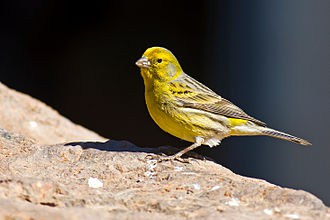
[fbcomments]
Atlantic Canary
| Origin | It is endemic to the Canary Islands, Azores and Madeira in the region known as Macaronesia in the eastern Atlantic Ocean. |
| Size | The wild Atlantic canary can range from 10 to 12 cm (3.9 to 4.7 in) in length, with a wingspan of 21 to 23.7 cm (8.3 to 9.3 in) and a weight of 8.4 to 24.3 g (0.30 to 0.86 oz), with an average of around 15 g (0.53 oz) |
| Colours | The male has a largely yellow-green head and underparts with a yellower forehead, face and supercilium. The lower belly and undertail-coverts are whitish and there are some dark streaks on the sides. The upperparts are grey-green with dark streaks and the rump is dull yellow. The female is similar to the male but duller with a grey head and breast and less yellow underparts. Juvenile birds are largely brown with dark streaks. |
| Lifespan | Can live 20+ years |
| Noise | Moderate, especially when kept in groups. |
| Characteristics | Difficult to train. |
| Interaction/Time Requirements, Diet, Supplies Needed | They eat a foreign finch seed mixture that contains various millets and other small seeds such as niger. You need to change food and water twice daily, and clean the cage at least once a day, replacing toys and broken climbing branches. A minimum of 12 inches long, 14 inches wide, and 12 inches high. Space is important and indoor cages should be as large as possible. A large cage is required even if the bird is going to spend lots of time out of its habitat with you. Aviaries are sold ready for home assembly. Most are a rectangular design, with a mesh covered flight, and smaller shelter area, in which the birds are fed and can take shelter from the bad weather. They require a warm habitat for the winter months. Do not allow your birds outdoors until all signs of frost are gone. |
| Other Considerations | Wild birds of this species are rarely kept outside of their natural habitat. |